
Pelican Island National Wildlife Refuge: planning a visit
Pelican Island National Wildlife Refuge is a place to observe the lagoon landscape from public mainland trails. The nesting island itself is closed to visitors. Plan an independent walk, look for birds from the permitted viewpoints and respect signs marking closed areas on land and water.
The refuge is reached from the A1A via Historic Jungle Trail. Centennial Trail is at 11455 Jungle Trail. Check current access times and conditions before leaving, and bring drinking water because it is not available at the refuge. A pair of binoculars helps you watch without approaching wildlife.
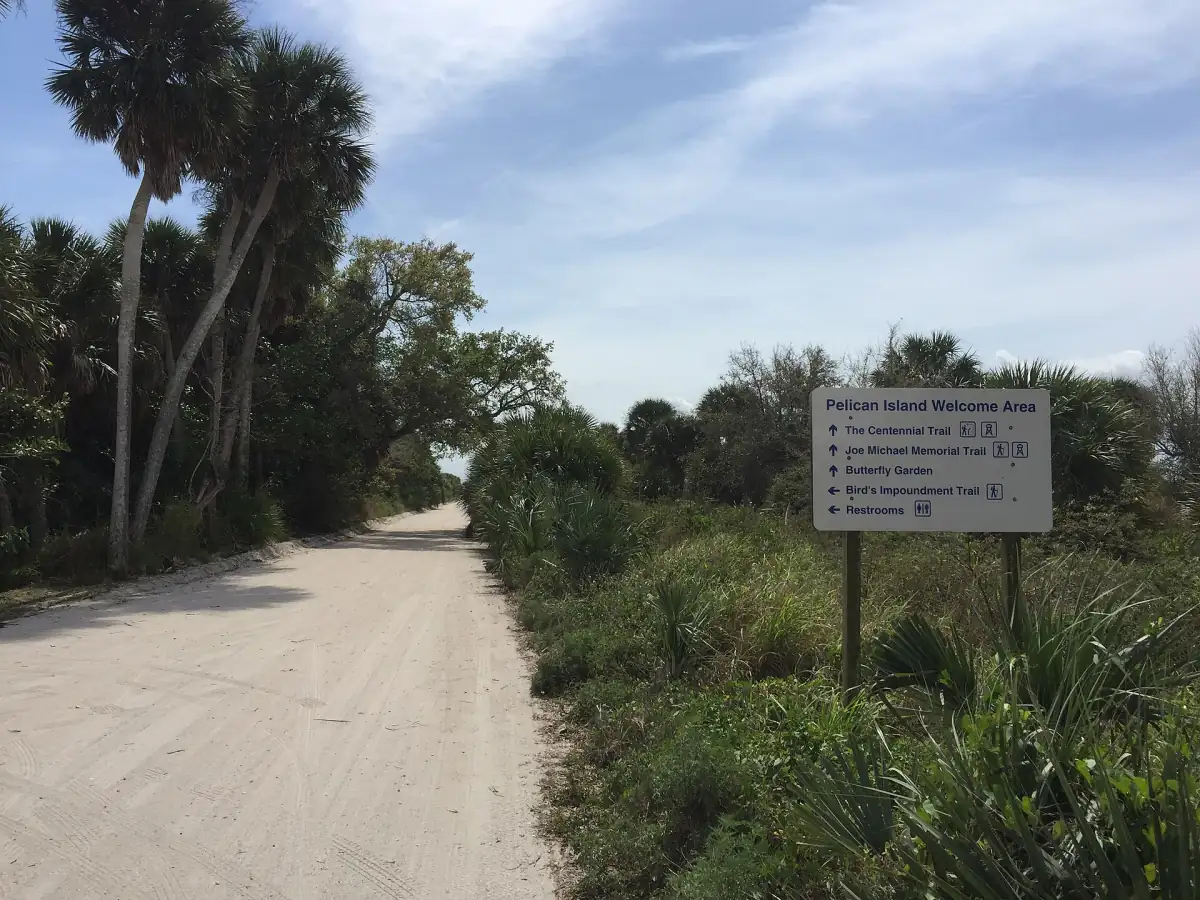
Centennial Trail and the public paths
The accessible Centennial Trail is three quarters of a mile long and provides a view toward the nesting island. The refuge lists roughly seven miles of trails in total. Choose a route according to the conditions and the time you have, and stay on the marked paths. Check current notices before your visit, especially after weather that could affect access.
Bicycles are not allowed on the trails. Pets are not permitted, apart from service animals. Take the water you need and plan your supplies before arriving. These simple preparations leave you free to concentrate on the landscape rather than looking for facilities during the walk.
Explore the wider region
For more ideas on the water and around Vero Beach, compare activities and their individual departure points.
Conservation and the protected sanctuary
President Theodore Roosevelt designated Pelican Island in 1903 as the first National Wildlife Refuge. Its protection is part of a longer story about the value of nesting habitat. The sanctuary is a place to observe and learn from the public areas, while the island and areas inside closed-area signs remain off limits.
Do not enter the nesting island or travel into signed closed areas by boat or kayak. Open parts of the lagoon and protected zones are different places, even when they appear close together on a map. Read signs on arrival and give wildlife space. This visit is about seeing a protected landscape without disturbing the animals that use it.
Birdwatching from autumn to spring
The refuge identifies autumn through spring as a particularly good period for pelicans, including migrating white pelicans. Wildlife moves on its own schedule, so treat the season as a planning clue rather than a promise. Look across the water, pause quietly and use binoculars instead of trying to move closer.
Do not disturb birds or plants, and do not use recorded sounds or electronic calls to attract birds. Staying on the trail makes it easier to protect sensitive habitat while sharing the viewpoint with other visitors. Allow enough time to observe patiently and enjoy the surroundings even if a particular bird does not appear.
The lagoon beyond the refuge
Pelican Island sits within the Indian River Lagoon landscape, an estuary separated from the Atlantic by barrier islands. The mainland trails, the water and the nesting island serve different purposes. A map can help you distinguish the route you may walk from the areas reserved for wildlife.
Read the Indian River Lagoon guide for more about the estuary and respectful wildlife observation. The history of Vero Beach places the refuge alongside the area's railway and development. If you also want to visit the Atlantic, compare access and current conditions in the beach guide.
For an unhurried day, consider the refuge as its own stop rather than assuming it is included in another activity. Check access times, pack water and sun protection, and leave room to respond to changing weather. The arrival guide helps you plan transport in the wider area.
Pelican Island: questions
Can I land on Pelican Island?
The nesting island is closed. Use the public mainland trails and respect all closed-area signs.
Is Centennial Trail accessible?
The refuge describes Centennial Trail as accessible and lists its length as three quarters of a mile. Check current trail conditions before visiting.
When can I see pelicans?
Autumn through spring is identified as a particularly good period, but wildlife sightings depend on the animals.
Should I bring water?
Yes. Drinking water is not available at the refuge, so bring enough for your walk.